Bukubukucha – Drinking tea the Okinawan way
When I first visited the Iruma City Museum (入間市博物館), which hosts its own tea museum, I learned a lot about local teas in Japan. It is only natural, that there is a tea museum in Iruma city, since it is located in Sayama, one of the tea producing areas in Japan, which unfortunately was strongly affected by the nuclear disaster in March 2011. Nevertheless, the museum was interesting and educational, not only for tea lovers, since a huge part of the display were the different local tea cultures around Japan. One of them especially caught my attention, why I conducted further research and even visited a school, where this unique tea culture is kept alive. In this blog entry, I want to talk about bukubukucha ( ブクブク茶 ), which is the local way of enjoying tea in Okinawa.
There are many things that are special about bukukucha. First of all, I have to mention that it is not prepared using leafs of the tea plant, but from Jasmine tea, which is called sanpincha in Okinawa. Jasmine tea is a popular beverage around Asia and it is even more so in Okinawa. To prepare bukubukucha, also bancha or genmaicha can be added to the jasmine tea. So, what makes bukubukucha different from sanpincha?
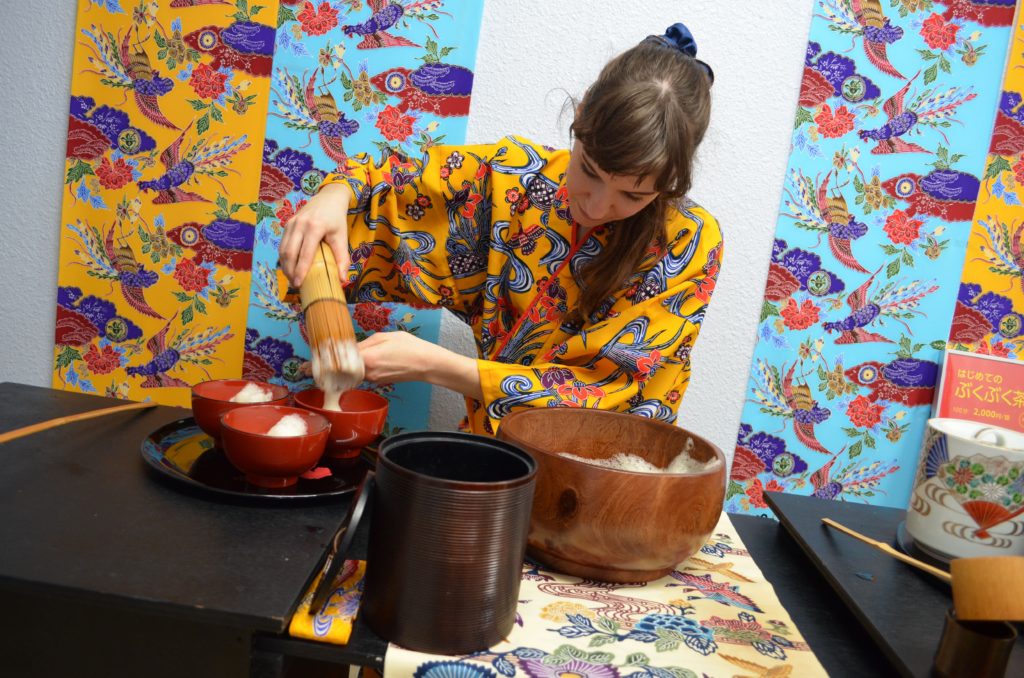
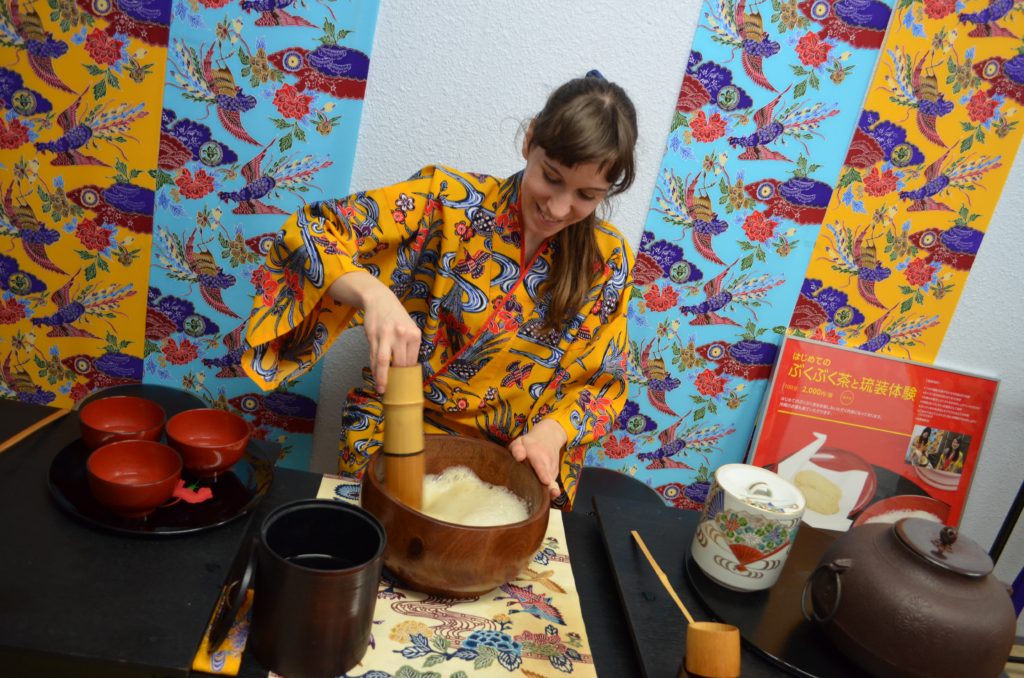
The second thing that makes the tea special is the the way it is prepared as well as the fact that it is actually made with rice. First, rice is boiled and the boiled water is mixed with the tea in a huge bowl. Then a huge whisk is used to create a foam. Normally, when preparing matcha, a whisk is used to create foam on top, but using a whisk is not limited to matcha, but also seen in local tea cultures such as this one, which are referred to as furicha (振り茶, whipped teas).
When the foam is done, the tea is poured into smaller tea cups and scrambled peanuts are added on top. Usually Okinawan biscuits called chinsuko are served together with the tea. Drinking bukubukucha might be quite challenging for beginners, since the foam on top is huge and in the beginning, one rather has to eat the foam, before it is possible to drink the tea as a beverage.
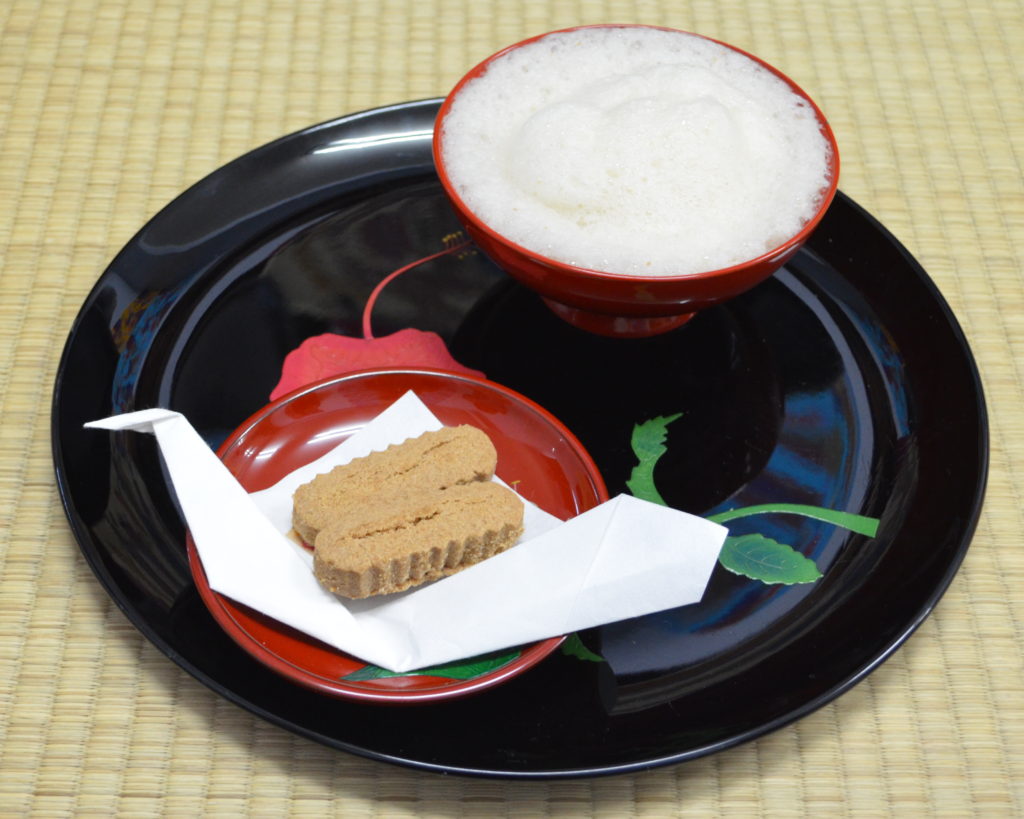
The history of bukubukucha
Bukubukucha was widely enjoyed during the Meiji period (明治時代, 1868-1912) and sold in stores until the beginning of the Second World War. It was performed similar to the Japanese tea ceremony or chanoyu (茶の湯) for weddings or to entertain guests. The name describes the bubbly (if it possible to make an adjective out of the noun bubbles?) texture of the foam (awa ga bukubuku shiteiru, 泡がぶくぶくしている), but it can also be written with the kanji “fuku” which means good luck (福福茶 or 福々茶). Unfortunately, by the end of the war, bukubukucha was on the edge of going distinct. Yet, this tea culture was being revived, as far as it possible. In the year 2000, the NPO Ryūkyū no sadō bukubukucha akeshino no kai (「NPO法人琉球の茶道ぶくぶく茶あけしのの会」) was founded with the goal to carry on this culture to the next generation.
My bukubuku-cha experience
When I learned about bukubukucha, I wanted to try this tea and luckily, I found a school in Kansai area, where I lived at that time. In this school called Ryūkyū-sadō kyōshitsu bukubuku-cha-kan (「琉球茶道教室ぶくぶく茶館」) in Ikeda city in Ōsaka prefecture, bukubukucha tea ceremony is taught and one-day experiences are offered. I went there in 2013 and enjoyed the experience very much. I was surprised, how much the performance resembled the temae (点前) of chanoyu. I guess that when the bukubukucha performance was revived after the war, some parts of the movements were inspired by chanoyu. I had fun not only drinking, but also trying the performance by myself and serving bukubukucha to my friends. I hope, that one day, I an enjoy that tea culture in its original environment in Okinawa as well.
Did you ever try bukubukucha? Please tell me about your experience.
References (Japanese)
朝日新聞「お酒じゃないけど!泡盛り ― 沖縄「ぶくぶく茶」関西で常設の教室」(『朝日新聞』)2013年2月20日付、2面 。
入間市博物館「日本各地の茶」(『入間市博物館』) http://www.alit.city.iruma.saitama.jp/07tea-museum/10japan.html (2019年2月27日確認)。
笠島香織「琉球茶道ぶくぶく茶館 」 https://bukubukuchakan.crayonsite.com (2019年2月27日確認)。
守屋 毅「茶の文化 ― 日本と世界 ― その一 ― 近世常民社会と茶の文化」(守屋毅編『茶の文化 ― その総合的研究』)京都、淡交社、1981年 。
BUKU×2、ぶくぶく茶。 「 ぶくぶく茶の歴史 」 (『 BUKU×2、ぶくぶく茶。 』) http://www.myu1208.com/rekisi.html (2019年2月27日確認 )。
NPO法人データベース「NPO法人琉球の茶道ぶくぶく茶あけしのの会」(『NPO法人データベース』) http://npo-db.info/%E6%B2%96%E7%B8%84%E7%9C%8C/%E6%B5%A6%E6%B7%BB%E5%B8%82/48778/ (2019年2月27日確認)。